Sodium Hypochlorite vs Calcium Hypochlorite: Which Disinfectant Suits Your Industrial Needs?
Sodium hypochlorite is a liquid chlorine-based disinfectant commonly used for water treatment and surface sanitisation, while calcium hypochlorite is a solid (powder or tablet) with higher chlorine concentration and longer shelf life. Both release hypochlorous acid (HOCl)—the active disinfecting agent—but differ in storage, application, and industrial suitability.
Introduction
Choosing the right disinfectant is critical for industries where hygiene, safety, and compliance directly impact operations. Two of the most widely used chlorine-based disinfectants are sodium hypochlorite and calcium hypochlorite.
While both release chlorine to kill bacteria, viruses, and algae, their properties, handling, and use cases differ significantly. This guide helps you choose the right option based on real industrial conditions—not just chemical composition.
What is Sodium Hypochlorite?
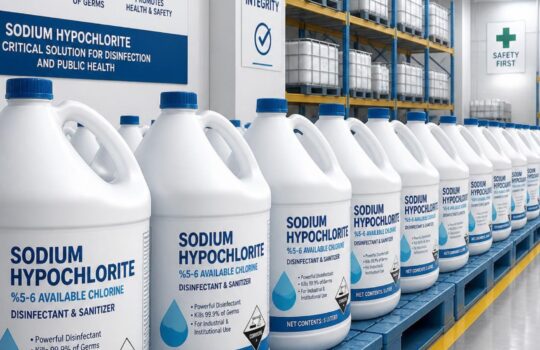
Sodium hypochlorite (NaOCl) is a liquid disinfectant commonly known as liquid bleach. It is widely used across industries due to its ease of application and fast action.
Key Characteristics:
- Typically available in liquid form (10–15% concentration for industrial use)
- Fast-acting disinfectant
- Easy to dose and mix with water
- Shorter shelf life (degrades over time, especially in heat and sunlight)
- Leaves minimal residue, making it ideal for clean systems
Common Industrial Uses:
- Water treatment plants
- Food processing units
- Textile bleaching
- Surface sanitisation in healthcare and hospitality
What is Calcium Hypochlorite?
Calcium hypochlorite (Ca(OCl)₂) is a solid disinfectant available in powder, granules, or tablets. It has a higher chlorine content compared to sodium hypochlorite.
Key Characteristics:
- Solid form (typically 65–70% chlorine content)
- Longer shelf life with slower degradation
- More stable during storage and transportation
- Requires dilution before use
- Can leave calcium residue, which may impact pipelines over time
Common Industrial Uses:
- Swimming pool sanitation
- Emergency water purification
- Rural and remote water treatment
- Wastewater treatment facilities
Sodium Hypochlorite vs Calcium Hypochlorite: Key Differences
| Feature | Sodium Hypochlorite | Calcium Hypochlorite |
|---|---|---|
| Form | Liquid | Solid (powder/tablet) |
| Chlorine Content | Lower (10–15%) | Higher (65–70%) |
| Shelf Life | Short | Long |
| Ease of Use | Very easy (ready to use) | Requires preparation |
| Storage | Sensitive to heat/light | More stable |
| Residue | Minimal | May leave calcium deposits |
| Transportation | Bulk liquid handling needed | Easier to transport |
| Cost Efficiency | Cost-effective for continuous use | Cost-effective for storage & remote use |
Quick Decision Guide: Which One Should You Choose?
- Choose Sodium Hypochlorite if:
- You need continuous, automated dosing
- You operate in large-scale water treatment or food industries
- You want fast action with minimal residue
- You have proper storage and supply systems in place
👉 Best for real-time, high-volume industrial disinfection
Choose Calcium Hypochlorite if:
- You need long shelf life and storage stability
- Your operations are in remote or low-infrastructure areas
- You require high chlorine concentration in compact form
- Transportation and storage flexibility are critical
👉 Best for portability, emergency use, and long-term storage
Industry-Specific Recommendations
1. Water Treatment Plants
- Best Choice: Sodium Hypochlorite
- Reason: Precise dosing, continuous chlorination, and operational efficiency
2. Food & Beverage Industry
- Best Choice: Sodium Hypochlorite
- Reason: Quick sanitisation with minimal residue and compliance-friendly
3. Rural Water Supply & Emergency Use
- Best Choice: Calcium Hypochlorite
- Reason: Easy transport, longer shelf life, and reliable disinfection
4. Swimming Pools & Recreation
- Best Choice: Calcium Hypochlorite
- Reason: High chlorine content and controlled application
5. Industrial Cleaning & Surface Disinfection
- Best Choice: Sodium Hypochlorite
- Reason: Ready-to-use format improves efficiency and consistency
Safety and Handling Considerations
Both chemicals are effective but require proper handling:
Sodium Hypochlorite:
- Store in cool, dark conditions to reduce degradation
- Avoid mixing with acids (can release chlorine gas)
- Monitor concentration over time due to strength loss
Calcium Hypochlorite:
- Keep dry and away from organic materials
- Handle carefully to avoid dust inhalation
- Always dilute properly before use
- Avoid moisture exposure to maintain stability
Cost vs Efficiency: What Matters More?
- Short-term, high-frequency use → Sodium Hypochlorite is more economical
- Long-term storage and transport → Calcium Hypochlorite is more efficient
However, the real cost depends on:
- Storage infrastructure
- Degradation losses
- Maintenance (e.g., residue buildup in systems)
- Operational efficiency
👉 For example, calcium hypochlorite may appear cheaper per unit but can increase maintenance costs due to scaling, while sodium hypochlorite may require more frequent replenishment.
Final Verdict
There is no one-size-fits-all answer.
- Sodium hypochlorite is best for industries needing immediate, scalable, and continuous disinfection with clean application
- Calcium hypochlorite is ideal for high stability, portability, and long-term storage needs
The right choice depends on your operational setup, infrastructure, and long-term cost considerations—not just chlorine concentration.
Looking for Reliable Disinfectant Solutions?
Choosing the right disinfectant is only half the equation—the supplier you partner with matters just as much.
Suntek Group delivers high-performance, industry-grade solutions tailored for water treatment, sanitation, and industrial hygiene. As trusted Sodium Hypochlorite manufacturers, they combine consistent quality, reliable supply, and application-specific expertise to support your operations at scale.
👉 Connect with Suntek Group to find the most effective disinfectant solution for your industrial needs.