CPW in PVC Pipes: Role, Benefits and Key Considerations
Chlorinated Paraffin Wax (CPW) is commonly used in PVC formulations as a secondary plasticizer and functional additive. In PVC pipe manufacturing, it can support flexibility, processing performance, flame resistance, and formulation cost optimisation. However, the right CPW grade and dosage depend on the PVC formulation, processing conditions, required mechanical properties, and end-use application.
What Is CPW in PVC Pipes?
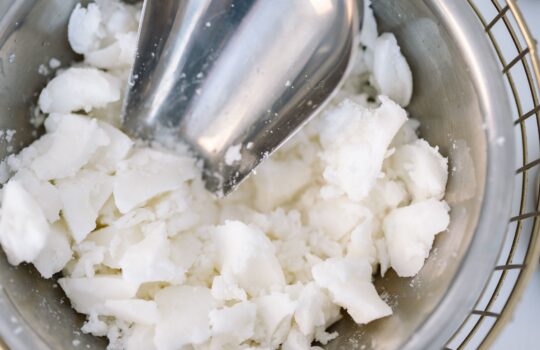
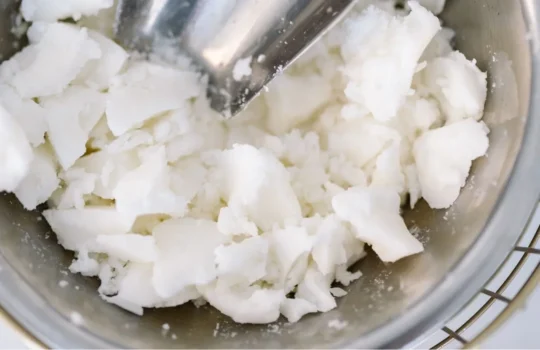
Chlorinated Paraffin Wax (CPW) is a chlorinated hydrocarbon produced by introducing chlorine into paraffin wax. It is used across several industrial applications, including PVC compounds, cable insulation, flooring, synthetic leather, sealants, and other polymer formulations.
In PVC pipes, CPW is generally used as a secondary plasticizer and formulation additive. It is often combined with primary plasticizers and other additives to achieve the required balance of processing characteristics, flexibility, durability, and cost.
The performance of CPW is not determined by its presence alone. Factors such as chlorine content, viscosity, compatibility, thermal stability, and dosage can significantly influence the final PVC compound.
What Role Does CPW Play in PVC Pipe Manufacturing?
CPW can perform several functions within a PVC formulation.
1. Acts as a Secondary Plasticizer
CPW can contribute to the plasticisation of PVC when used alongside a suitable primary plasticizer. It can help modify the flexibility and workability of the compound without being relied upon as the sole plasticizing component.
This makes CPW useful when manufacturers need to balance product performance with formulation economics.
2. Supports PVC Processing
The right CPW grade can influence the processing behaviour of a PVC compound during mixing and extrusion. When correctly formulated, it can contribute to consistent melt behaviour and help manufacturers achieve the required surface and dimensional characteristics.
However, processing performance depends on the complete formulation rather than CPW alone.
3. Contributes to Flame Resistance
Because CPW contains chlorine, it can contribute to the flame-retardant characteristics of PVC formulations. This can be beneficial in applications where resistance to ignition and flame propagation is an important performance consideration.
The overall flame performance, however, depends on the entire additive system and should be established through appropriate testing.
4. Helps Optimise Formulation Economics
CPW can be used as a cost-effective secondary additive in suitable PVC formulations. It may help manufacturers achieve the desired balance of performance and raw-material cost when used at an appropriate level.
Cost reduction should always be evaluated alongside mechanical properties, durability, processing performance, and applicable product requirements.
What Are the Benefits of CPW in PVC Pipes?
When the appropriate grade is correctly incorporated, CPW can provide several potential benefits:
- Secondary plasticisation: Helps modify the flexibility and workability of PVC compounds.
- Processing support: Can contribute to consistent processing during PVC compounding and extrusion.
- Flame-retardant contribution: Its chlorine content can support the flame-resistance characteristics of the formulation.
- Cost optimisation: Can complement primary plasticizers and help manage formulation costs.
- Formulation flexibility: Different CPW characteristics allow manufacturers to select materials according to application requirements.
- Compatibility with additive systems: Suitable grades can be incorporated alongside plasticizers, stabilisers, lubricants, and other PVC additives.
The actual benefit depends on the CPW grade, concentration, PVC resin, and complete formulation.
How Does CPW Affect PVC Pipe Performance?
CPW can influence several properties of a PVC compound, but more is not necessarily better.
The appropriate amount can help achieve the desired balance between flexibility, processing behaviour, and other performance characteristics. Excessive or poorly selected CPW may negatively affect properties such as tensile strength, hardness, dimensional stability, or long-term performance.
For this reason, CPW should be evaluated as part of the complete PVC formulation rather than as an isolated raw material.
Manufacturers should consider how CPW interacts with the PVC resin, primary plasticizer, heat stabiliser, lubricant, filler, pigment, and other additives used in the compound.
What Should You Consider When Selecting CPW for PVC Pipes?
Selecting CPW based solely on price can create formulation and quality problems. Several technical factors should be evaluated before choosing a grade.
Chlorine Content
Chlorine content is an important CPW specification because it can influence plasticising behaviour, compatibility, viscosity, and contribution to flame resistance.
The appropriate chlorine level depends on the intended application and the requirements of the PVC formulation.
Compatibility With the PVC System
CPW should be compatible with the PVC resin and other additives used in the formulation. Poor compatibility can contribute to processing difficulties, migration, surface defects, or inconsistent product performance.
Testing the CPW within the actual formulation is therefore important before moving to large-scale production.
Viscosity and Thermal Stability
Viscosity can influence mixing, dispersion, and processing behaviour, while thermal stability becomes particularly important during PVC extrusion.
The selected CPW should remain suitable under the processing conditions used by the manufacturer.
Mechanical Requirements
PVC pipes must meet mechanical and dimensional requirements appropriate to their application. CPW selection and dosage should therefore be evaluated against properties such as:
- Tensile strength
- Impact resistance
- Hardness
- Flexibility
- Dimensional stability
- Long-term durability
A formulation that performs well in processing but fails to meet the required mechanical properties is not a successful formulation.
End-Use Application
The right CPW grade depends on the type of PVC product and its intended use. Requirements can differ between rigid and flexible PVC products, profiles, cables, flooring, and other applications.
The material should therefore be selected based on the performance requirements of the final product.
How Much CPW Should Be Used in PVC Pipes?
There is no single CPW dosage that is suitable for every PVC pipe formulation.
The required level depends on the PVC resin, primary plasticizer system, stabilisers, processing conditions, desired flexibility, mechanical requirements, and other formulation components.
Rather than applying a standard dosage, manufacturers should conduct formulation trials and performance testing to determine the optimum level. This helps identify a suitable balance between processing, mechanical performance, durability, and cost.
How Can Manufacturers Check CPW Quality?
Before selecting a CPW supplier, manufacturers should evaluate both the technical specifications and consistency of the material.
Important parameters can include:
- Chlorine content
- Viscosity
- Thermal stability
- Moisture content
- Physical appearance
- Compatibility with the existing PVC formulation
- Batch-to-batch consistency
- Technical documentation
- Quality control procedures
- Application-specific test results
A reliable supply of consistent-quality CPW is particularly important for large-scale PVC production, where variation between batches can affect processing and finished-product performance.
Common Mistakes When Using CPW in PVC Formulations
Several formulation mistakes can reduce the effectiveness of CPW.
Choosing CPW based only on price: A lower-cost material may not provide the required technical performance or consistency.
Using an unsuitable grade: CPW characteristics need to match the formulation and application.
Increasing dosage without testing: Higher CPW levels do not automatically improve PVC performance and can adversely affect mechanical properties.
Ignoring compatibility: Interactions between CPW and other additives can influence processing, migration, and final product quality.
Skipping production trials: Laboratory specifications should be validated under actual processing conditions before full-scale implementation.
How to Choose the Right CPW for PVC Pipes
CPW can be a useful component in PVC formulations when its grade and dosage are carefully matched to the application’s requirements. Its role extends beyond secondary plasticisation, with potential contributions to processing behaviour, flame resistance, formulation flexibility, and cost optimisation.
The most suitable CPW should be selected by considering chlorine content, viscosity, thermal stability, compatibility, dosage, mechanical requirements, processing conditions, and end-use performance. Testing the material within the complete PVC formulation is essential for achieving consistent results.
For manufacturers looking for a reliable source of CPW for industrial applications, working with experienced CPW manufacturers can help ensure consistent material quality and technical suitability. Suntek Group supplies CPW solutions for industrial applications and can help businesses evaluate suitable material specifications for their formulation requirements. Contact Suntek Group to discuss your CPW requirements and identify the right solution for your PVC manufacturing process.