Why Manufacturers Are Switching to Green Plasticizers
Manufacturers are increasingly switching to green plasticizers to meet evolving environmental regulations, improve product safety, and support sustainable manufacturing without compromising performance. Beyond compliance, green plasticizers help businesses strengthen their market position, meet customer expectations, and prepare for the future of industrial manufacturing.
Sustainability is no longer just a corporate initiative—it has become a key factor in product development, procurement decisions, and global supply chains. Industries that rely on flexible polymers are looking for materials that deliver high performance while reducing environmental impact. As a result, green plasticizers have become an important solution for manufacturers seeking long-term business growth and regulatory readiness.
What Are Green Plasticizers?
Green plasticizers are becoming an essential part of sustainable manufacturing because they help manufacturers achieve the flexibility required in polymer products while reducing environmental impact. Understanding what they are and where they are used provides a strong foundation for understanding why industries are rapidly adopting them.
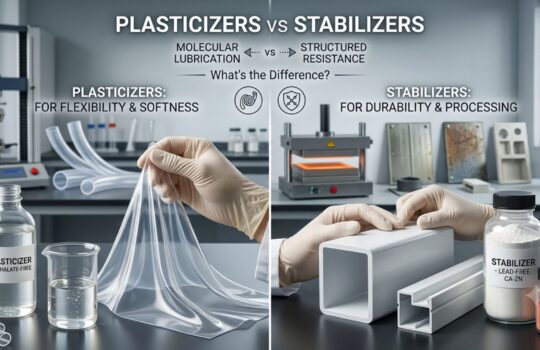
Green plasticizers are environmentally responsible additives used to improve the flexibility, softness, and processability of polymers, particularly PVC. Unlike many traditional plasticizers, they are designed to reduce environmental impact while maintaining the mechanical properties required for industrial applications.
Depending on the formulation, green plasticizers may be derived from renewable resources or engineered to meet stricter environmental and product safety standards.
They are commonly used in:
- Flexible PVC compounds
- Wire and cable insulation
- Flooring materials
- Synthetic leather
- Automotive interior components
- Medical products
- Consumer goods
- Packaging applications
Why Are Manufacturers Switching to Green Plasticizers?
The growing adoption of green plasticizers is driven by much more than environmental awareness. Manufacturers today must balance regulatory compliance, customer expectations, product performance, and long-term business growth. Together, these factors are encouraging businesses across industries to replace conventional plasticizers with more sustainable alternatives.
Stricter Environmental Regulations
Governments and regulatory authorities around the world continue to strengthen standards related to chemical safety and environmental responsibility. Manufacturers supplying domestic and international markets increasingly need raw materials that align with these evolving requirements.
Green plasticizers help businesses prepare for changing regulations while reducing the risk of future reformulation and compliance challenges.
Sustainability Has Become a Competitive Advantage
Today’s customers expect manufacturers to do more than deliver quality products—they also expect responsible manufacturing practices.
Many OEMs, retailers, and global brands now evaluate suppliers based on sustainability initiatives. Businesses that adopt greener raw materials can strengthen customer relationships and improve their position in competitive markets.
Growing Demand for Safer Materials
Manufacturers are under increasing pressure to use materials that support safer products and production processes. Green plasticizers provide an opportunity to improve environmental performance while maintaining the flexibility and durability required across industrial applications.
Better Opportunities in Global Markets
International buyers often require suppliers to demonstrate compliance with environmental and quality expectations before approving materials.
Using sustainable plasticizer solutions helps manufacturers meet customer specifications and improve their competitiveness in export markets.
Future-Proofing Manufacturing Operations
Investing in sustainable raw materials today allows businesses to prepare for tomorrow’s regulations, customer expectations, and market trends.
For many manufacturers, switching to green plasticizers is no longer simply about sustainability—it’s about long-term business resilience.
Business Benefits of Switching to Green Plasticizers
Beyond supporting sustainability goals, green plasticizers offer measurable business advantages. They help manufacturers reduce compliance risks, strengthen customer relationships, and prepare for future market requirements while maintaining product performance.
Reduce Compliance Risks
As environmental regulations continue to evolve, manufacturers need materials that align with current and future compliance requirements. Green plasticizers help simplify regulatory readiness while reducing the likelihood of costly reformulations.
Read more: https://thesuntek.com/cost-vs-sustainability-are-green-plasticizers-worth-the-investment/
Meet Customer Sustainability Expectations
Many global brands include sustainability as part of their supplier evaluation process. Adopting greener materials demonstrates environmental responsibility and can strengthen long-term business partnerships.
Maintain Product Performance
Modern green plasticizers are engineered to provide flexibility, durability, and processing performance comparable to conventional alternatives, making the transition easier for manufacturers.
Support Long-Term Business Growth
Choosing sustainable materials today helps manufacturers stay ahead of industry trends while supporting innovation, responsible manufacturing, and long-term competitiveness.
Green Plasticizers vs Traditional Plasticizers
Choosing between traditional and green plasticizers is no longer based solely on cost. Manufacturers are increasingly evaluating long-term value, regulatory readiness, and sustainability performance. The comparison below highlights the key differences.
| Decision Factor | Traditional Plasticizers | Green Plasticizers |
|---|---|---|
| Environmental Impact | Higher | Lower |
| Compliance Readiness | Requires continuous monitoring | Better suited for evolving regulations |
| Market Acceptance | Conventional | Increasingly preferred by global brands |
| Sustainability Goals | Limited | Supports ESG and sustainability initiatives |
| Long-Term Business Value | Moderate | Better aligned with future market expectations |
While traditional plasticizers continue to serve many applications, green plasticizers are becoming the preferred choice for manufacturers focused on sustainability, compliance, and future growth.
Read more: https://thesuntek.com/green-plasticizers-vs-traditional-plasticizers-which-is-better/
Industries Benefiting from Green Plasticizers
Green plasticizers are used across a wide range of industries where flexibility, durability, and regulatory compliance are essential. As sustainability expectations continue to grow, more manufacturers are integrating these materials into their product formulations.
PVC Compound Manufacturing
Green plasticizers help improve flexibility and processing performance while supporting the production of more sustainable PVC compounds.
Wire and Cable
Manufacturers use green plasticizers in insulation and sheathing applications where flexibility, durability, and compliance with evolving environmental standards are important.
Automotive Components
Automotive suppliers increasingly use sustainable materials in interior trims and flexible PVC components to support changing industry expectations.
Synthetic Leather
Green plasticizers are widely used in synthetic leather applications for footwear, furniture, and fashion products where flexibility and durability remain essential.
Flooring and Construction
Flooring manufacturers adopt green plasticizers to develop durable, flexible products that align with modern sustainability requirements.
Why the Shift Is Happening Faster Than Before
The transition toward green plasticizers has accelerated significantly in recent years. Regulatory changes, customer expectations, and corporate sustainability commitments are all reshaping material selection across global supply chains, making green plasticizers a strategic investment rather than simply an environmental choice.
Several factors are driving this accelerated adoption:
- Global brands are strengthening sustainability requirements for suppliers.
- Procurement teams increasingly evaluate environmental performance alongside quality and price.
- Export markets continue to adopt stricter environmental standards.
- Manufacturers are investing in future-ready materials to remain competitive.
- Businesses are aligning product development with long-term ESG and sustainability goals.
What Should Manufacturers Consider Before Switching?
Although green plasticizers offer significant advantages, every manufacturing process has unique technical requirements. Evaluating compatibility, processing conditions, and supplier capabilities before implementation helps ensure a successful transition with minimal production disruption.
Before adopting green plasticizers, manufacturers should evaluate:
- Compatibility with existing polymer formulations
- Processing performance
- Product quality requirements
- Target market regulations
- Long-term supply reliability
- Technical support from the supplier
Careful product evaluation and collaboration with experienced suppliers can help ensure a smooth transition without affecting manufacturing efficiency.
What to Look for in Green Plasticizers Manufacturers
Selecting a plasticizer supplier involves more than comparing product specifications. Manufacturers should choose partners that can provide consistent quality, technical guidance, and long-term supply reliability to support both current production and future business growth.
Look for manufacturers that offer:
- Consistent product quality
- Reliable manufacturing capabilities
- Technical application support
- Regulatory documentation
- Custom formulation expertise
- Stable supply chains
- Experience across multiple industries
Manufacturers need more than a material supplier—they need a partner who understands polymer formulations, application requirements, and evolving market expectations. Suntek Group combines manufacturing expertise with advanced plasticizer solutions to help customers adopt greener alternatives while maintaining product performance and production efficiency.
The Future of Green Plasticizers
As industries continue to prioritize sustainable manufacturing, the role of green plasticizers will only become more important. Advances in material science, stricter environmental regulations, and increasing customer demand are expected to drive further innovation across the specialty chemicals industry.
Future developments are likely to focus on:
- Advanced bio-based plasticizer technologies
- Improved compatibility with PVC formulations
- Lower-carbon manufacturing processes
- High-performance sustainable additives
- Greater support for circular manufacturing practices
For manufacturers, adopting green plasticizers is becoming a strategic investment that supports innovation, compliance, and long-term business growth.
Conclusion
The shift toward green plasticizers reflects a broader transformation in modern manufacturing. Companies are no longer evaluating raw materials based solely on cost and performance—they are also considering sustainability, regulatory compliance, and long-term business value.
By adopting greener plasticizer solutions, manufacturers can improve product safety, strengthen customer confidence, prepare for evolving regulations, and build a more resilient business for the future.
If you’re looking for trusted Green Plasticizers manufacturers, Suntek Group offers advanced plasticizer solutions backed by manufacturing expertise, consistent quality, and technical support. Contact our team today to find the right green plasticizer solution for your application and move toward more sustainable manufacturing.