Green Plasticizers vs Phthalate Plasticizers: What’s the Difference and Which Is Better?
Green plasticizers are environmentally friendly alternatives to traditional phthalate plasticizers. While both improve the flexibility and durability of plastics, green plasticizers are designed to offer lower toxicity, better environmental performance, and improved compliance with modern regulations. Phthalate plasticizers remain cost-effective for many industrial applications, but green plasticizers are increasingly preferred by manufacturers focused on sustainability, product safety, and global regulatory compliance.
Plasticizers are essential additives that make plastics softer, more flexible, and easier to process. They are widely used in PVC products across industries such as construction, automotive, healthcare, electrical, packaging, and consumer goods. As environmental concerns and regulations continue to evolve, manufacturers are increasingly evaluating whether green plasticizers or traditional phthalate plasticizers are the better choice.
This guide explains the key differences, benefits, limitations, and applications of both, helping businesses make informed decisions.
Green Plasticizers vs Phthalate Plasticizers: A Quick Comparison
| Feature | Green Plasticizers | Phthalate Plasticizers |
|---|---|---|
| Source | Renewable or low-toxicity materials | Petroleum-based chemicals |
| Environmental Impact | Lower | Higher |
| Health Profile | Generally considered safer | Some types face regulatory concerns |
| Regulatory Compliance | Better suited for global regulations | Restricted in certain applications |
| Sustainability | High | Moderate |
| Cost | Slightly higher | More economical |
| Market Trend | Growing rapidly | Gradually declining in sensitive applications |
What Are Plasticizers?
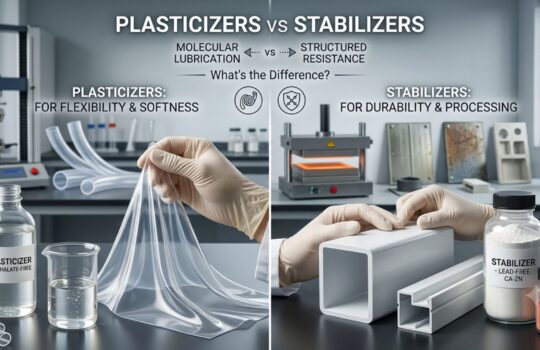
Plasticizers are chemical additives that increase the flexibility, softness, and workability of polymers, particularly Polyvinyl Chloride (PVC). Without plasticizers, many plastic products would be rigid and unsuitable for applications requiring flexibility and durability.
They are commonly used in:
- Wire and cable insulation
- PVC flooring
- Synthetic leather
- Medical tubing
- Automotive interiors
- Packaging materials
- Consumer products
Selecting the right plasticizer influences product performance, manufacturing efficiency, regulatory compliance, and overall product lifespan.
What Are Phthalate Plasticizers?
Phthalate plasticizers have been the industry standard for decades because they provide excellent flexibility, durability, and processing performance at a relatively low cost.
They are commonly used in PVC compounds where flexibility is essential.
Advantages
- Cost-effective for high-volume production
- Excellent plasticizing efficiency
- Good mechanical performance
- Proven manufacturing reliability
- Widely available worldwide
Limitations
Although effective, several phthalate plasticizers have faced increasing scrutiny due to potential health and environmental concerns.
Some limitations include:
- Possible migration from finished plastic products
- Regulatory restrictions in certain consumer and medical applications
- Growing environmental concerns
- Reduced acceptance in sustainability-focused markets
As a result, many manufacturers are exploring non-phthalate and bio-based alternatives.
What Are Green Plasticizers?
Green plasticizers are environmentally friendly alternatives developed using renewable resources or lower-toxicity raw materials. They are designed to deliver comparable flexibility while reducing environmental impact and supporting safer manufacturing practices.
These eco-friendly plasticizers are becoming increasingly popular across industries aiming to improve sustainability without compromising product performance.
Benefits of Green Plasticizers
Green plasticizers offer several important advantages:
- Lower toxicity
- Reduced environmental impact
- Better compatibility with sustainable manufacturing
- Improved regulatory compliance
- Reduced dependence on fossil-based resources
- Growing acceptance in international markets
As demand for sustainable plasticizer solutions grows, manufacturers are increasingly incorporating green plasticizers into their product portfolios.
Why Are Industries Switching to Green Plasticizers?
The transition toward greener materials is being driven by multiple factors beyond environmental responsibility.
Several industries are actively adopting green plasticizers, including:
- Medical device manufacturing
- Wire and cable production
- Automotive interior components
- PVC flooring
- Synthetic leather manufacturing
- Food-contact and consumer products
Manufacturers serving export markets are also responding to growing customer demand for safer and more sustainable raw materials.
Read More: https://thesuntek.com/green-plasticizers-vs-traditional-plasticizers-which-is-better/
How Global Regulations Are Influencing Plasticizer Selection
Regulatory standards have become an important factor when selecting plasticizers.
Many countries have introduced restrictions on specific phthalates used in toys, medical products, food-contact materials, and consumer goods. Regulations such as REACH in Europe and RoHS for electrical and electronic products encourage manufacturers to adopt safer alternatives where appropriate.
For companies supplying international markets, selecting environmentally responsible plasticizers not only supports compliance but also enhances brand credibility and market competitiveness.
Are Green Plasticizers as Effective as Phthalate Plasticizers?
Modern green plasticizers have advanced significantly in recent years.
Many high-quality formulations now offer performance comparable to traditional phthalate plasticizers in terms of:
- Flexibility
- Durability
- Processing efficiency
- Heat resistance
- Long-term stability
The ideal choice depends on factors such as polymer type, application requirements, operating conditions, and customer specifications. Manufacturers often evaluate multiple formulations before finalizing the most suitable solution.
Read more: https://thesuntek.com/why-manufacturers-are-switching-to-green-plasticizers/
Which Plasticizer Is Right for Your Application?
There is no one-size-fits-all solution.
Choosing between green plasticizers and phthalate plasticizers depends on:
- Product application
- Performance requirements
- Regulatory obligations
- Sustainability goals
- Customer expectations
- Budget considerations
Green plasticizers are often the preferred option for products intended for export markets, environmentally conscious customers, or industries with strict compliance requirements. Traditional phthalate plasticizers may still be suitable for cost-sensitive industrial applications where regulations permit their use.
Evaluating both immediate manufacturing needs and long-term market trends will help businesses make informed decisions.
Conclusion
Both green plasticizers and phthalate plasticizers continue to play important roles in modern plastic manufacturing. While phthalate plasticizers remain a practical solution for many industrial applications, the industry is steadily moving toward greener alternatives that support sustainability, product safety, and global compliance. As customer expectations and regulations evolve, adopting environmentally responsible plasticizer technologies can help manufacturers stay competitive while delivering high-performance products.
If you’re looking for trusted Green Plasticizers manufacturers, Suntek Group provides innovative plasticizer solutions that combine performance, quality, and sustainability. Contact our team today to find the right plasticizer solution for your manufacturing requirements and support your long-term business goals.