Green Plasticizers vs Traditional Plasticizers: Which Is the Better Choice?
Plasticizers are essential additives used to improve the flexibility, durability, and processability of plastic materials. They play a critical role in products ranging from PVC flooring and wire insulation to packaging films, synthetic leather, and automotive components.
As sustainability becomes a priority across industries, manufacturers are increasingly comparing green plasticizers and traditional plasticizers to determine which option best meets their performance, compliance, and environmental goals.
So, how do these two types of plasticizers compare, and which one is the better choice for modern manufacturing?
Green Plasticizers vs Traditional Plasticizers: Quick Answer
Green plasticizers are environmentally friendly alternatives to traditional petroleum-based plasticizers. They are often derived from renewable or bio-based resources and are designed to reduce environmental impact while supporting regulatory compliance and sustainability initiatives. Traditional plasticizers remain widely used due to their proven performance and cost-effectiveness, but green plasticizers are becoming increasingly popular as industries move toward more sustainable production practices.
What Are Plasticizers?
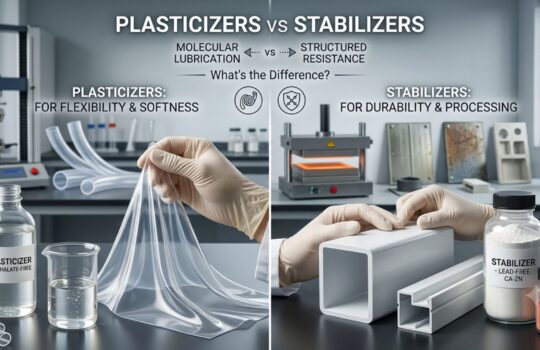
Plasticizers are additives incorporated into polymers to make them softer, more flexible, and easier to process. Without plasticizers, many plastic products would be rigid, brittle, and less suitable for applications requiring flexibility.
They are commonly used in:
- PVC cables and wires
- Vinyl flooring
- Packaging materials
- Medical tubing
- Synthetic leather
- Automotive interiors
- Construction products
The type of plasticizer selected can significantly influence product performance, longevity, compliance, and environmental impact.
What Are Traditional Plasticizers?
Traditional plasticizers are primarily derived from petroleum-based feedstocks and have been used by the plastics industry for decades. Many conventional plasticizers belong to the phthalate family and are valued for their ability to improve flexibility while maintaining cost efficiency.
Benefits of Traditional Plasticizers
- Proven performance across a wide range of applications
- Cost-effective for large-scale manufacturing
- Strong compatibility with many polymer systems
- Established supply chains and market availability
Challenges of Traditional Plasticizers
While traditional plasticizers continue to be widely used, they face increasing scrutiny due to environmental and regulatory concerns.
Some common challenges include:
- Dependence on non-renewable fossil resources
- Growing regulatory restrictions in certain markets
- Higher environmental footprint
- Increased focus on chemical safety and sustainability
As global industries prioritize sustainable manufacturing, many companies are evaluating alternatives that offer a lower environmental impact.
Read more: https://thesuntek.com/how-green-plasticizers-are-replacing-traditional-plastic-additives/
What Are Green Plasticizers?
Green plasticizers are sustainable alternatives designed to provide flexibility and performance while reducing environmental concerns associated with conventional plasticizers.
They are often produced from renewable resources such as vegetable oils, biomass-derived feedstocks, or other bio-based materials.
Key Features of Green Plasticizers
- Derived from renewable or sustainable sources
- Lower environmental impact
- Improved sustainability profile
- Support for ESG and sustainability goals
- Better alignment with evolving regulatory requirements
Green plasticizers are becoming increasingly important in industries seeking to balance performance with environmental responsibility.
Green Plasticizers vs Traditional Plasticizers: Key Differences
| Parameter | Green Plasticizers | Traditional Plasticizers |
|---|---|---|
| Raw Material Source | Renewable or bio-based feedstocks | Petroleum-based feedstocks |
| Environmental Impact | Lower | Higher |
| Carbon Footprint | Generally lower | Generally higher |
| Sustainability | Strong | Limited |
| Regulatory Acceptance | Increasingly favored | Subject to greater scrutiny |
| Circular Economy Alignment | Better | Limited |
| Long-Term Market Trend | Growing demand | Gradual transition toward alternatives |
| Resource Dependence | Renewable resources | Fossil-based resources |
While traditional plasticizers remain effective in many applications, green plasticizers offer clear advantages for manufacturers pursuing sustainability and future regulatory readiness.
Why Are Manufacturers Shifting Toward Green Plasticizers?
Several factors are driving the growing adoption of green plasticizers across global industries.
Sustainability Goals
Many companies have established environmental, social, and governance (ESG) targets aimed at reducing their environmental footprint. Green plasticizers support these objectives by helping reduce reliance on fossil-based raw materials.
Evolving Regulations
Regulatory frameworks continue to evolve as governments and organizations focus on safer chemical use and sustainable production. Manufacturers increasingly seek solutions that align with future compliance requirements.
Customer Expectations
Consumers and business customers alike are demanding more environmentally responsible products. Sustainable additives can help manufacturers meet these expectations while strengthening brand value.
Circular Economy Initiatives
Many industries are adopting circular economy principles that encourage responsible resource use and waste reduction. Green plasticizers fit naturally within these sustainability-focused strategies.
Key Industries Driving Demand for Green Plasticizers
The transition toward sustainable plastic additives is particularly noticeable in industries where environmental performance and product safety are becoming important purchasing factors.
Construction and Flooring
Manufacturers of vinyl flooring, wall coverings, and construction materials are increasingly exploring sustainable additives to improve environmental performance.
Wire and Cable Manufacturing
Cable producers require flexibility, durability, and long-term stability. Green plasticizers are gaining attention as manufacturers look for sustainable solutions without compromising quality.
Packaging Industry
Packaging companies are under pressure to reduce environmental impact and improve sustainability throughout the supply chain.
Automotive Sector
Automotive manufacturers are incorporating sustainable materials into vehicle production, creating opportunities for bio-based plasticizer technologies.
Synthetic Leather and Consumer Goods
Manufacturers of synthetic leather products, footwear, and consumer goods are increasingly adopting environmentally responsible material solutions to meet changing market expectations.
How Green Plasticizers Support Sustainable Manufacturing
Sustainability is no longer a secondary consideration—it is becoming a key business requirement.
Green plasticizers help manufacturers:
- Reduce dependence on fossil-based feedstocks
- Improve the renewable content of products
- Support corporate sustainability initiatives
- Lower environmental impact
- Align with customer sustainability expectations
- Strengthen long-term market competitiveness
For businesses supplying international markets, sustainable formulations can also enhance brand reputation and support future growth opportunities.
Read more: https://thesuntek.com/how-green-plasticizers-are-replacing-traditional-plastic-additives/
Factors Manufacturers Should Evaluate Before Switching
Although green plasticizers offer many advantages, selecting the right solution requires careful evaluation.
Performance Requirements
The plasticizer must provide the flexibility, durability, and processing characteristics required for the intended application.
Polymer Compatibility
Compatibility with PVC and other polymer systems is essential to ensure consistent product quality and manufacturing efficiency.
Regulatory Considerations
Manufacturers serving global markets should assess current and future compliance requirements, including standards related to chemical safety and environmental responsibility.
Total Cost of Ownership
The decision should consider not only material costs but also long-term benefits such as sustainability advantages, regulatory preparedness, and customer demand.
Do Green Plasticizers Perform as Well as Traditional Plasticizers?
Modern green plasticizer technologies have advanced significantly in recent years. Many formulations now offer performance characteristics that can meet the requirements of demanding industrial applications.
The suitability of any plasticizer ultimately depends on factors such as:
- Product application
- Processing conditions
- Regulatory requirements
- Durability expectations
- Commercial objectives
For many applications, green plasticizers can provide an effective balance between performance and sustainability.
Which Plasticizer Is the Better Choice?
The answer depends on your manufacturing priorities.
Traditional Plasticizers May Be Suitable If:
- Cost is the primary consideration
- Existing formulations already meet requirements
- Sustainability goals are not a major purchasing factor
- Established formulations continue to perform effectively
Green Plasticizers May Be a Better Choice If:
- Sustainability is a strategic objective
- Customers demand environmentally responsible products
- Regulatory compliance is becoming increasingly important
- Your company is working toward ESG goals
- You want to future-proof product formulations
For many manufacturers, the choice is no longer between performance and sustainability. Advances in green plasticizer technology are helping companies achieve both.
Are Green Plasticizers Replacing Traditional Plasticizers?
Not entirely.
Traditional plasticizers continue to play an important role across many industries because of their proven performance and widespread availability. However, demand for green plasticizers is growing rapidly as manufacturers seek safer, more sustainable alternatives that align with changing market and regulatory expectations.
Rather than a complete replacement, the industry is experiencing a gradual transition toward more sustainable plasticizer solutions.
Conclusion
Green plasticizers and traditional plasticizers both have important roles in modern manufacturing. Traditional plasticizers offer decades of proven performance, while green plasticizers provide a pathway toward improved sustainability, reduced environmental impact, and stronger alignment with future industry trends.
As businesses continue to focus on responsible manufacturing, environmental stewardship, and regulatory readiness, green plasticizers are expected to become an increasingly significant part of the plastics industry.
At Suntek Group, we are committed to delivering innovative chemical solutions that help manufacturers achieve both performance and sustainability goals. If you are looking for a reliable green plasticizer manufacturer, connect with Suntek Group to explore advanced plasticizer solutions tailored to your application and business requirements.