CPE vs PVC: What’s the Difference and Which Material Is Better?
When selecting materials for industrial, construction, cable, and manufacturing applications, two commonly used options are Chlorinated Polyethylene (CPE) and Polyvinyl Chloride (PVC). Both materials are known for their durability and versatility, but they differ significantly in terms of flexibility, weather resistance, chemical performance, and end-use applications.
If you’re wondering whether CPE or PVC is the better choice, the answer depends on your specific requirements. This guide breaks down the key differences to help you make an informed decision.
CPE vs PVC: Quick Answer
CPE and PVC are both durable polymer materials, but they serve different purposes.
- CPE offers superior flexibility, weather resistance, impact strength, and chemical resistance, making it ideal for demanding industrial applications.
- PVC is more cost-effective and widely used in construction, plumbing, and general-purpose applications.
If long-term performance in harsh environments is your priority, CPE is often the better choice. If affordability and versatility are more important, PVC may be the right option.
What Is CPE?
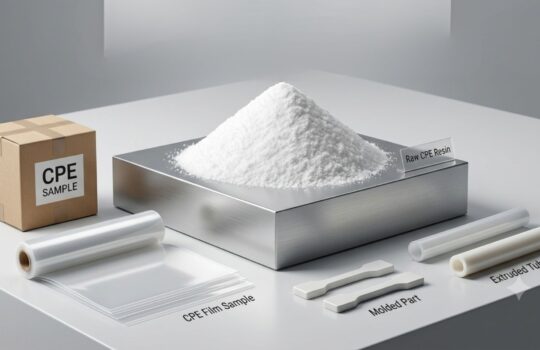
Chlorinated Polyethylene (CPE) is produced by chlorinating polyethylene, which enhances its physical and chemical properties. The chlorination process gives the material excellent resistance to heat, weathering, chemicals, and mechanical stress.
Because of its durability and flexibility, CPE is widely used in industries that require materials capable of performing in challenging conditions.
Common Applications of CPE
- Wire and cable insulation
- Industrial hoses
- Roofing membranes
- Waterproofing systems
- Automotive components
- Rubber modification
- Industrial sheets and profiles
Read more: https://thesuntek.com/how-cpe-improves-durability-in-industrial-applications/
What Is PVC?
Polyvinyl Chloride (PVC) is one of the most widely used plastics in the world. It is available in rigid and flexible forms and is valued for its affordability, ease of processing, and broad range of applications.
PVC is commonly found in residential, commercial, and industrial products due to its balance of durability and cost-effectiveness.
Common Applications of PVC
- Water and drainage pipes
- Electrical conduits
- Window and door frames
- Flooring materials
- Packaging products
- Medical tubing
- Construction materials
Key Differences Between CPE and PVC
1. Flexibility
One of the biggest differences between CPE and PVC is flexibility.
CPE naturally offers excellent flexibility and elasticity. It can withstand repeated bending and movement without losing its performance characteristics, making it ideal for cables, hoses, and flexible industrial products.
PVC can be made flexible through the use of additives, but it generally does not match the long-term flexibility of CPE.
Winner: CPE
2. Weather and UV Resistance
Materials used outdoors must withstand sunlight, rain, temperature changes, and environmental exposure.
CPE performs exceptionally well in outdoor environments because it resists UV radiation, ozone, and weather-related degradation. This helps maintain its physical properties over time.
PVC offers reasonable weather resistance but may become brittle or degrade after prolonged exposure to harsh environmental conditions.
Winner: CPE
3. Impact Strength
Impact resistance is important for products exposed to physical stress or mechanical loads.
CPE has excellent impact strength and remains durable even at lower temperatures. This makes it suitable for demanding industrial environments.
PVC is durable under normal conditions but can become more brittle when exposed to cold temperatures or significant impact.
Winner: CPE
4. Chemical Resistance
Both materials provide good resistance to many chemicals, but there are differences in performance.
CPE demonstrates strong resistance to oils, acids, alkalis, and industrial chemicals. This makes it a preferred choice for industrial applications where chemical exposure is common.
PVC also offers good chemical resistance and performs well in many applications, particularly in plumbing and construction.
Winner: CPE for demanding industrial environments
5. Temperature Performance
Temperature fluctuations can affect material performance over time.
CPE maintains its flexibility and mechanical properties across a wider temperature range. It performs reliably in both hot and cold environments.
PVC performs well under standard operating temperatures but may lose flexibility or become brittle under more extreme conditions.
Winner: CPE
6. Cost
Cost is often a major factor when selecting materials.
PVC is generally more affordable due to its widespread production and availability. It is often the preferred choice for large-scale construction and infrastructure projects where budget considerations are important.
CPE typically costs more because of its enhanced performance characteristics and specialized manufacturing process.
Winner: PVC
CPE vs PVC: Side-by-Side Comparison
| Feature | CPE | PVC |
|---|---|---|
| Flexibility | Excellent | Moderate |
| Weather Resistance | Excellent | Good |
| UV Resistance | Excellent | Moderate |
| Impact Strength | High | Moderate |
| Chemical Resistance | Excellent | Good |
| Temperature Performance | Excellent | Good |
| Cost | Higher | Lower |
| Typical Applications | Cables, hoses, roofing, industrial products | Pipes, fittings, flooring, construction materials |
Which Material Is Better?
There is no universal answer because the “better” material depends on the application.
Choose CPE If You Need:
- Superior flexibility
- Long-term outdoor durability
- High impact resistance
- Better weather and UV protection
- Strong chemical resistance
- Reliable performance in demanding industrial environments
Choose PVC If You Need:
- A cost-effective material
- General-purpose performance
- Construction and plumbing applications
- Easy processing and fabrication
- Large-scale projects with budget constraints
For applications where performance, durability, and environmental resistance are critical, CPE often delivers greater long-term value. For everyday construction and infrastructure applications, PVC remains a practical and economical solution.
Conclusion
Both CPE and PVC are valuable materials with unique advantages. PVC continues to be a popular choice due to its affordability and versatility, while CPE stands out for its flexibility, weather resistance, impact strength, and superior performance in challenging conditions.
When selecting between the two, consider the operating environment, performance requirements, and expected service life of the final product. Choosing the right material can improve durability, reduce maintenance, and enhance overall product performance.
If you’re looking for high-quality chlorinated polyethylene for industrial applications, Suntek Group offers reliable CPE solutions designed to meet diverse industry requirements. As one of the trusted CPE manufacturers, Suntek Group delivers consistent quality and performance to support manufacturers across a wide range of applications.